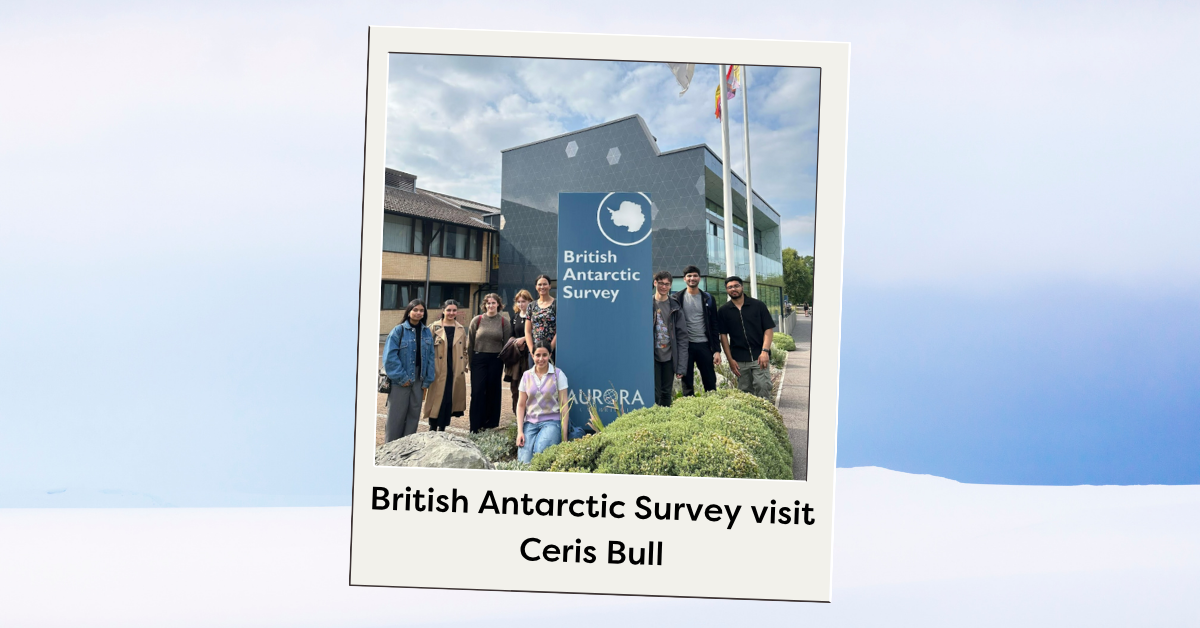
Ceris Bull discusses her experience visiting the British Antarctic Survey headquarters on an In2careers site visit earlier this year.
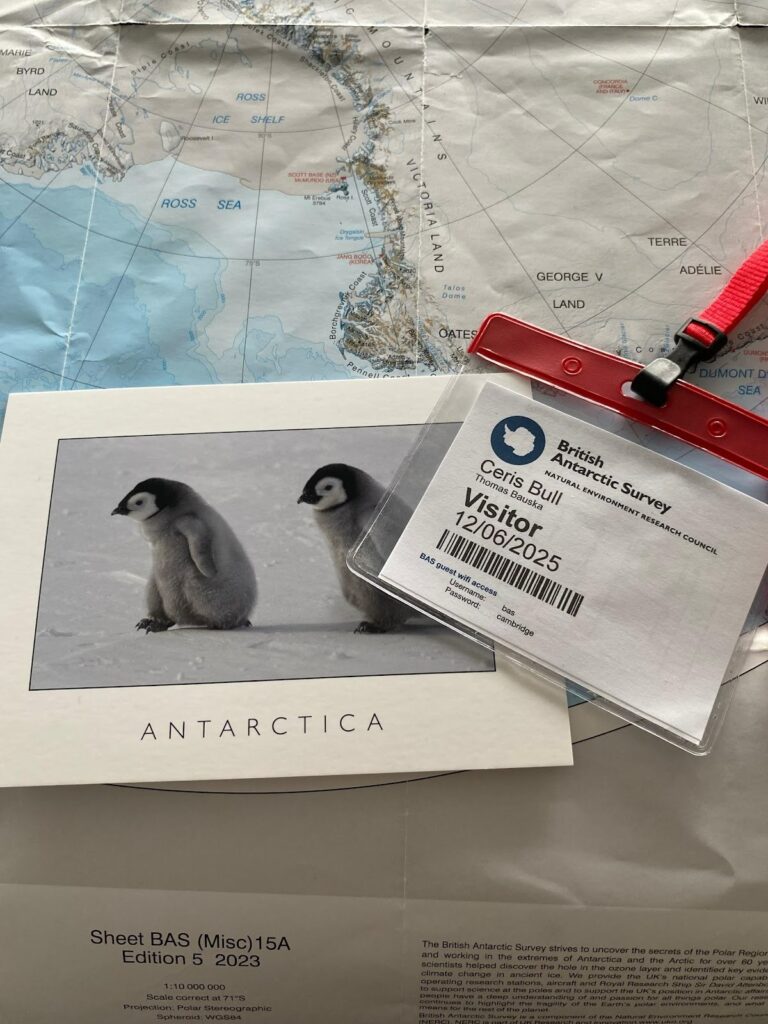
I recently had the opportunity to go on a visit to the British Antarctic Survey in Cambridge through an event organised by In2careers. The experience was both inspiring and insightful and gave me a real sense of what research in environmental science looks like day to day.
One of the most interesting things I learned was that much of the equipment used at BAS is designed and built by the researchers themselves. Because so much of their work is highly specialised, the tools they need often don’t even exist on the market!
For example, Thomas, one of the scientists we met, had built his own gas lab. His set-up included a machine that crushes ice under vacuum, allowing gases trapped within the ice to be collected and measured. From this, researchers can calculate past concentrations of gases like CO₂ and reconstruct what Earth’s atmosphere was like when the ice first formed.
A highlight of the day was being able to see and handle an ice core sample. I had assumed these would be too valuable to touch, so I was pleasantly surprised to be given the chance! Holding the ice and seeing the tiny bubbles trapped inside made the idea of “data from the past” much more tangible. It was a simple moment, but one that really brought the science to life.
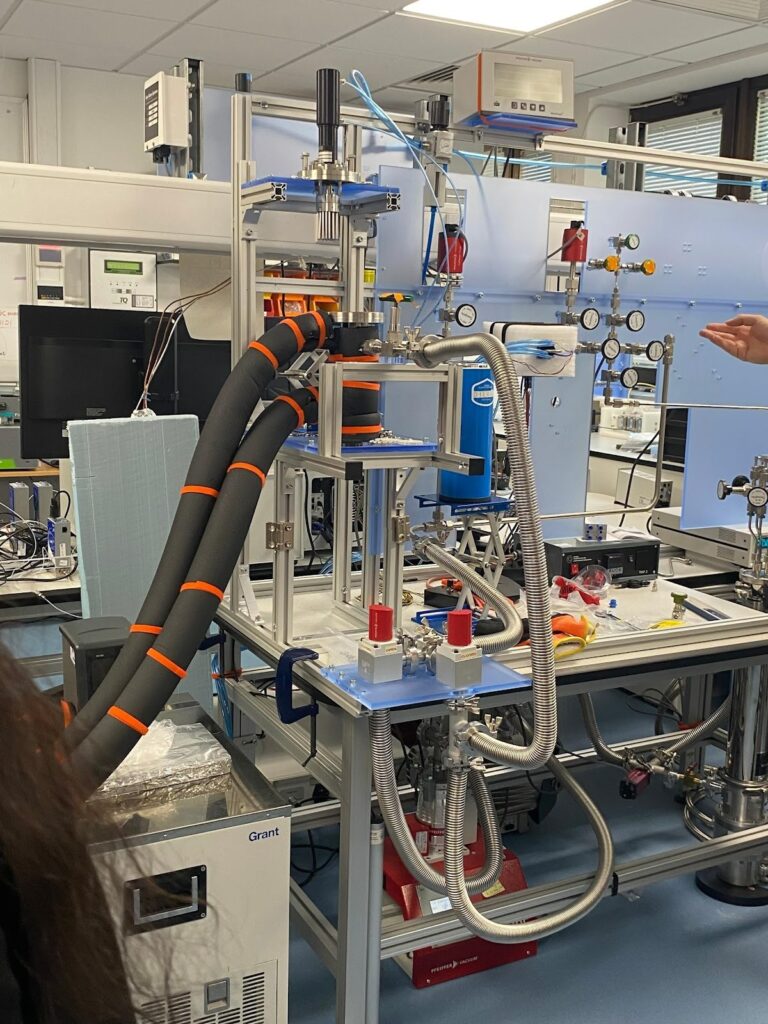

Some of the hand-built equipment in Thomas’ lab (left) and holding an ice core (right)
I originally applied for the visit as a way of exploring potential career options, since I’m currently studying environmental science and already interested in climate change research. I didn’t have many expectations beyond hoping to learn from professionals in the field, but the day went far beyond what I imagined. The tours of the ice core and gas labs were fascinating, and speaking with researchers gave me a clear picture of how many different career paths there are in environmental science.
The visit has made me even more motivated to pursue a placement year with the BAS or a similar institution. In just one day, I learned so much about the realities of research, and it strengthened my ambition to work in a research-focused role in the future.
I’m very grateful to the In2careers team for organising the event and to the team at the BAS for dedicating their time and insights to showing us around. I also came away with some valuable new connections which I’m really thankful for.